The Primacy of People - AI’s Virtues and Flaws Belong to Us
The prime asset, the actual brains behind, the true decision maker, the only free will and agency underlying ANY AI system or platform is a HUMAN ACTOR.
Ian Belknap, , 7-minute read
The prime asset, the actual brains behind, the true decision maker, the only free will and agency underlying ANY AI system or platform is a HUMAN ACTOR. Whether individual or in a group, it is ONLY humans that can shape, propel, focus, enliven, smarten up, etc. any application of AI. And conversely is ONLY the individual or group of humans that can render an AI application or system or platform exploitative, deceptive, larcenous, evasive, duplicitous, etc. ANY of the excesses of which AI may be accused, whether in the vein of “too smart/capable for its own good” or “self-aware/sentient” OR in the “it’s a big fat lying liar who’s trying to steal from us” the ONLY means by which it warrants any such accusation is DIRECTLY attributable to the influence of the humans designing, developing, and deploying it.
It is WE who make AI helpful and useful; it is WE who make AI destructive and distorted.
Period, full stop.
So all the bot-blaming that folks are doing in response to the headline-grabbing, clickbatory (in the present age, a sadly necessary portmanteau of “clickbait” and “masturbatory,” or, perhaps somewhat less crudely clickbasistic, which naturally is a combo of “clickbait” and “solipsistic”) items about AI. Items that are not aimed at any kind of legitimate analysis or examination of the properties of AI, but ultimately are intended simply to bend your attention in the direction of the company, tech guru, platform, etc. that’s the subject of the article/post/video clip, etc. - invariably an entity/person/product with a (usually unstated) economic stake in instilling some particular form of anxiety in you as you read/view it. If you took a sampling of any dozen such pieces and strip away the details, you’re likely to find a structure something like this:
Alarming revelation about something AI has “done on its own,” or that represents some “AI-generated alteration of its intended purpose or authorized arena of activity.”
Interviewer lobs leading questions to the subject of the piece, permitting them to sketch out some Nightmarish Dawn of Our Overthrow by the Now-Sentient Bots scenario. A scenario which relies upon your lack of technical knowledge about the way these systems work, usually through a combination of dense jargon and volitional-sounding language when referring to the “errant” platform/tool, like “it wanted,” or “it decided.”
Now that you as reader/viewer are sufficiently rattled, the subject of the interview may step in as savior - since you’ve just witnessed their command of the jargon, it follows that they and they alone are equal to the now-urgent task of lopping off the proliferation of hydra heads on this (apparently) marauding beast you weren’t (made to be) worried about till you came upon this piece. Or do you not even CARE about the extinction-level sky-is-falling event that’s been described for you by a concerned citizen who just HAPPENS to the CEO of a startup in the emergent meteorite defense sector?
We’ll call this form of story The Huckster Stepping in to Save You From a Nonexistent Threat.
This kind of phenomenon is obviously nothing new. In any newly forming marketplace, especially one that carries with it credible causes for concern, there will be those who are keen to latch onto the anxiety generated by the new category of product or technology, whose focus will be upon codifying and intensifying this anxiety so as to monetize its exploitation.
All of which is a province of exclusively human activity - the product or technology at the supposed heart of the freakout is a kind of combination of neutral bystander and scapegoat. A famously gut-wrenching example of this phenomenon is how, in 1903, Thomas Edison publicly electrocuted Topsy the elephant as a demonstration of the supposed hazards of alternating current (AC,) which the inventor/ruthless capitalist asserted were greater than the direct current (DC) that he championed. If possible, the fact that Edison and his confederates (who included circus impresario P.T. Barnum) did not actually electrocute Topsy to death, they jolted and cooked her corpse, which had been publicly executed by poisoning before a crowd of 1,500 on Coney Island. Topsy, abused all through her life in captivity, had earned a reputation for aggression (what today we might be inclined to call “self defense,”) so was put down.
The obverse form of the kind of Huckster story outlined above is perhaps equally prevalent. That version goes something like this:
Mindblowing description of some miraculous-seeming, too-good-to-be-true faculty or capability AI has recently demonstrated that will LITERALLY TRANSFORM EVERY ASPECT OF THE WAY WE LIVE AND WORK FOR THE BETTER.
Interviewer lobs leading softball questions to the subject of the piece, permitting them to sketch out the dawn of some Dewy New Utopia, an Unprecedented Golden Age of Peace and Plenty made possible, as luck would have it, by the platform or product they stopped by to promote. This tale is also told using a mess of jargon, peppered with lots of friendly-sounding helpful phrases like “it’s trying to understand you,” “assist you,” and “support you” however it can. A scenario that also relies upon your lack of technical knowledge about how these systems work - the shift in rhetoric being from an emphasis on “volition” or “agency,” to one of “understanding and assisting.”
Now that you as reader/viewer are sufficiently lulled, the subject of the interview may step in as a sort of avuncular concierge whose aim is your eternal contentment and freedom from worry and prosperity. And as you can only conclude, given their command of jargon and soothing tone, it is they and they alone who are capable of flapping their cherub wings to pluck you up and set you down in this paradise (about which you only just came to learn about over the course of this article/video.) Or do you not even WANT the happiness and untold riches offered up to you by a good neighbor who just HAPPENS to be the CEO of a recently launched LLC in the digital wellness space?!?
We might call this narrative The Fairy Godmanager Waving Their Wand to Grant Wishes You Didn’t Know You Had.
At either extreme of the stories springing up to form the Foundational Lore of this technology, and all the narrative gradients between, it is PEOPLE devising and shaping these stories. Furthermore, it isn’t simply that humans are deciding the course of the stories getting told about this technology, people are responsible for ALL the decisions that determine the shape, flow, operation, scope, and nature of the technology.
Make no mistake: it IS TRUE that LLMs and other AI systems are unlike any previous tool or technology - the degree to which they are adaptive is without precedent (the “machine learning” we hear so much about,) and staggering speed at which they adapt is like nothing that’s come before it. This automated ability to self-refine over time renders this technology distinct from any preceding it, sets it apart from any tool we’ve used THROUGHOUT ALL OF OUR HISTORY. But AI remains precisely that - a tool, which means that like any tool it is subject to the manipulations and underlying intentions of the people building and wielding it.
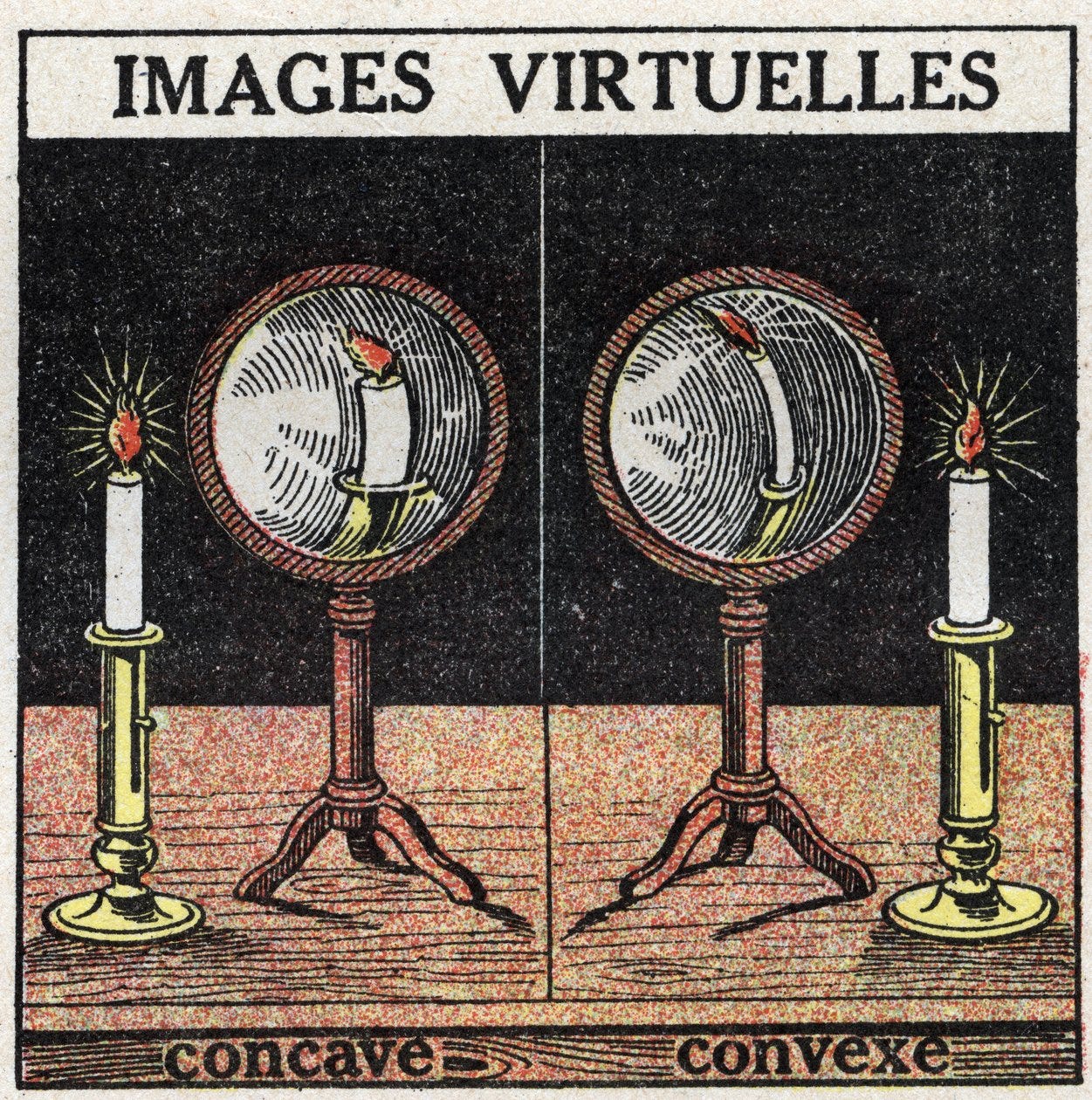
While discussing the essence of AI during a ZeroWidth brainstorm, John Cain hit upon (or maybe he was quoting something - I can’t now recall) the notion that AI is the widest mirror in human history. Meaning that, like a mirror, AI is flattened, it is a representation, and it is a reflection.
AI is flattened. As discussed in previous editions of this newsletter, AI in its present form cannot approach the depth and complexity of human thought. Where you or I are able to make associative leaps, combine reason and intuition to arrive at conclusions, etc., AI does none of this. Despite the vastness of the data set upon which it may draw, it does not know or understand anything in the way we do.
AI is a representation. If you paint somebody’s portrait or take a photo, no matter how faithful and accurate that likeness is, it remains a likeness - it is lifelike, it is not life. A similar principle pertains to AI - it approximates or depicts the patterns and sense of human communication without generating them the way we do. For emphasis, a sculpture, having three dimensions, remains a representation; a film or video, having motion, remains a representation - any means of image-making or -capture, whatever its characteristics, remains a representation. Likewise AI, for all its seeming ingenuity, remains a representation.
AI is a reflection. The volition or agency that gets mis-ascribed to AI with seeming greater frequency is merely a reflection of the autonomy of its creators and users - what appears to be AI’s “self-determination” is neither: it has no “self” and it is we who determine what it is and becomes.
We would all do well to remember that the stories we tell about AI - whether of the Huckster variety, the Fairy Godmanager, or the stories we tell ourselves - they are exactly that, stories. And as we know, the truth of a thing is almost never as neat or symmetrical as a story. If we are to attain any kind of clarity in our thinking about AI, we must keep sight of the ways such stories alter our conceptions and beliefs. As often as not, a helpful filter to apply to such stories is to ask: “Who or what stands to gain if I permit my thinking to align with this story?”